


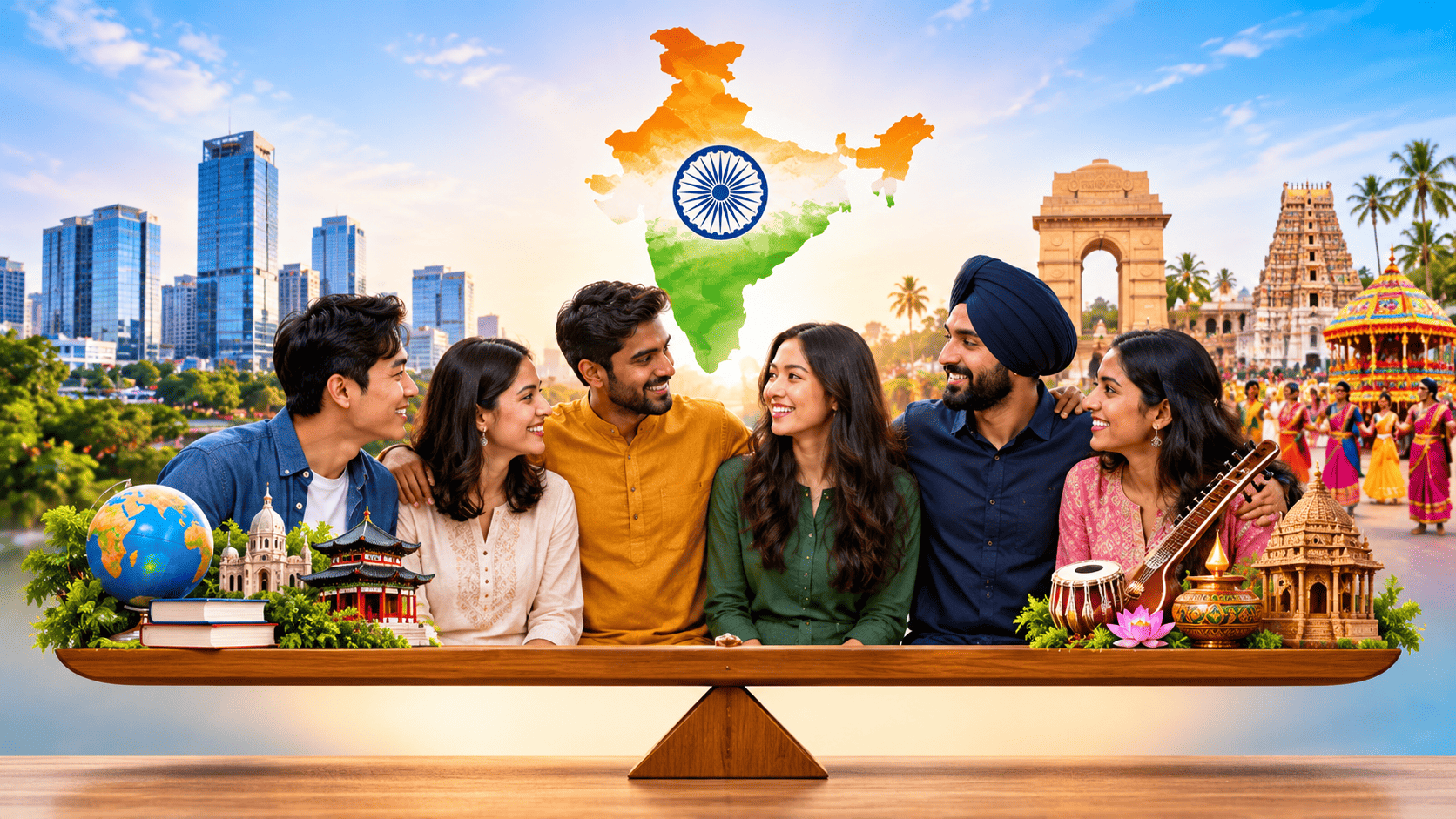
Cultural Integration or Assimilation? Finding the Right Balance in India
- Expat in India, Relocation,
- 0 Comment
- November 2, 2026
Travel across India and the differences appear quickly. The script on a signboard changes. Breakfast tastes different. A festival that filled the streets in one city may pass quietly in another. Yet people from all these places share classrooms, offices, apartment lifts and neighbourhood markets.
The question is not whether people adapt. Of course they do. It is how much change should be expected of them, and whether belonging requires them to leave something behind. That is the often-blurred line between integration and assimilation.
What do integration and assimilation actually mean?
Integration is what happens when someone finds a place in a new community without cutting ties with their own background. They learn local habits, make friends and take part in everyday life. At the same time, they may continue speaking their language, cooking the food they grew up with and observing traditions that matter to them. The community they enter has a part to play too. It cannot place the entire burden of adjustment on the newcomer. Integration involves a little movement on both sides.
Assimilation is different. It begins when fitting in slowly becomes a demand to blend in. A person may feel pushed to speak only the dominant language, soften an accent, change how they dress or keep certain customs out of public view. Nobody may openly tell them to do so. Social approval can be persuasive enough.
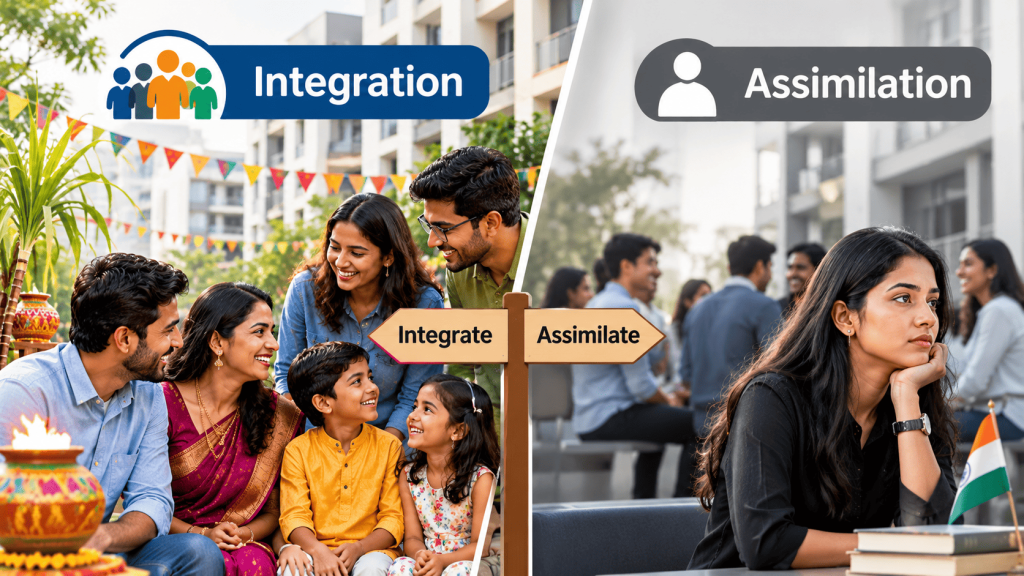
Take a Tamil-speaking family that relocates to Delhi. Learning Hindi makes school, shopping and conversations with neighbours easier. They may join local celebrations while continuing to speak Tamil at home and celebrate Pongal. Their world has expanded, not been replaced. If the family starts hiding those practices to avoid judgment, however, adaptation has begun to look like erasure.
India has never been culturally still
The idea of a completely fixed culture does not fit India’s history. People, goods and beliefs have moved through the subcontinent for centuries. Those encounters left traces in the words people use, the food served at home, musical traditions, buildings and clothing.
Communities did not simply absorb every outside influence. They borrowed, altered and made things their own. Identity here often comes in layers. Someone can be Marathi, Christian and Indian without choosing only one label.

Not every encounter was equal. Colonial rule gave English education and British institutions enormous prestige. They created opportunities, but many local languages and knowledge systems lost status. Cultural change feels different when it is tied to authority and advancement.
Independent India sought to build national unity while recognising the country’s linguistic and cultural diversity. Linguistic states and constitutional protections for minority cultures recognised that diversity was already part of the country’s character.
You can see integration in small, ordinary moments.
The clearest examples appear in daily routines. A colleague brings modak to the office and later tries a neighbour’s sheer khurma. Children switch languages between home and the playground. A Bengaluru housing society celebrates Kannada Rajyotsava alongside festivals introduced by residents from other parts of India.
Food travels particularly well. Dosa, momos, biryani and chole bhature are eaten far beyond their home regions. The versions are not always authentic, and arguments about that can get lively, but curiosity is often the first step towards familiarity.
Language requires more care. Learning a few local words is useful and signals a willingness to meet the place halfway. The effort should be appreciated rather than tested for perfection.

The reverse is also true. An accent should not become a joke, and a mother tongue should not be treated as evidence that someone is less capable. Language connects people when it is an invitation. It pushes them away when it becomes an entry requirement.
For employers, these questions are practical. A transferred professional may face an unfamiliar language, new food habits and school arrangements all at once. Thoughtful relocation support and respect for religious or dietary needs can make the transition less isolating. Moving to a new city is rarely just a change of address. There are practical things to manage, but there is also the less visible work of getting comfortable in a new environment. Relocation services in India can make this transition more manageable by supporting clients with the practical aspects of moving and settling into a new city. Formula Group supports clients throughout the relocation process, helping them navigate the practicalities of settling into new surroundings.
A city can welcome you and still ask you to change
India’s large cities are built by migration. Students arrive for university, professionals follow jobs, and families seek better prospects. People who might never have met at home end up working together or sharing an apartment floor.
New habits form quickly. A working language emerges, food preferences widen and friendships cross regional lines. Much of the change is voluntary. But there is another side to it. A difficult name gets shortened without the person being asked. Someone stops carrying a strongly spiced lunch after colleagues comment on the smell. A regional accent is toned down during meetings because it attracts more attention than the idea being discussed.

No policy orders these changes, which makes them easy to overlook. People read the room and adjust. One compromise may not matter, but several repeated over years can push part of someone’s identity out of public view.
Rural change follows a different rhythm. Traditions remain influential, but smartphones, education and migration have altered what young people watch and expect. A teenager can enjoy Korean music, study in a nearby city and still return for a village festival. That may simply be contemporary identity.
The global influence is already here
Globalisation adds another layer. A Gurugram professional may speak Haryanvi with family, Hindi with friends and English on a client call. Their playlist could be Korean and their lunch South Indian.

This openness has a downside. Cities begin to offer the same brands and lifestyles while smaller traditions compete for attention. Shutting out global influence is not the answer. The challenge is to stay open without assuming that local means old-fashioned.
So where should the balance lie?
A shared society does need some common ground. Respect for the law, equal dignity, freedom of belief and consideration for others are reasonable expectations. Speaking, dressing and celebrating in exactly the same way are not. Integration works when people can participate without pretending that their background does not exist. Assimilation may create a tidy appearance of unity, but it often hides

discomfort rather than resolving it. At the same time, protecting cultural identity does not mean living in closed circles and avoiding everyone outside them. The balance is worked out in ordinary choices. It is there when a teacher values the language a child speaks at home, when colleagues learn to pronounce a name correctly, and when a newcomer makes a sincere effort to understand local customs.
0 Comment




Leave a Reply